The New Zealand Eating Behaviour Questionnaire Platform

The New Zealand Eating Behaviour Questionnaire Platform
Instruction
  • Practice
  • Your Current Hunger
  • Start the test
  • Eating behaviours
  • How it works
  • Our Science

A test to identify your personal eating behaviour

  • Understanding your unique eating behaviour phenotype helps you to identify why you eat, what drives your weight gain and prevents you from achieving lasting weight loss success.
  • Your eating drivers or motivation to eat are those inert signals that compel you to eat and that may overwhelm your willpower during any dieting attempt.

Please ask yourself

Why do I eat? What motivates me to eat?

  • What are the internal drivers that propel me to eat in different situations?
  • Please add one sentence.

What are eating behaviour phenotypes?

  • Eating behaviour phenotypes are observable patterns or traits of how people behave in relation to food.
  • A person's genetic predispositions determine some of these phenotypes related to weight gain.
  • Others are learned behaviours and are related to environmental factors.
  • Eating behaviour phenotypes can be divided into three main groups.

1. Feasters or reduced satiation

The absence of the feeling of fullness during meals can lead to larger portion sizes and overeating.

Ask yourself – do you get a good sense of fullness during a meal?

  • Satiation is the feeling of fullness that tells your brain to stop eating. Reduced satiation makes it challenging to recognise when to stop eating, leading to delayed meal termination and unwanted overeating.
  • Satiation is determined by satiety hormones derived from your gut that relay to your brain a sense of fullness, and that slow the emptying of your stomach.
  • Adaptations of those satiety hormones are used in modern weight-management medications that work best in individuals with this dominant phenotype.
  • The questionnaire will determine the extent of your degree of feasting-type eating behaviour.

Constant Hunger or reduced satiety

Struggling with a powerful hunger sensation between meals

Ask yourself: Do you get hungry when you haven’t had a meal in a while?

  • Satiety is the sensation of fullness and not wanting or needing to eat.
  • Having a reduced satiety phenotype means that you frequently struggle with hunger and often look for food.
  • You may also notice an early return to hunger after a meal.
  • Satiety is related to the transit of food through your stomach, the background level of hunger hormones, and your metabolism.
  • Certain weight management medications and dietary modifications can help with this sensation and allow greater control over your eating.
  • The questionnaire will assess your degree of constant hunger-type eating behaviour.

Emotional Eating

A strong desire for comfort foods to deal with emotional triggers

Ask yourself – do you use food to make you feel better, to comfort you or to reduce stress?

  • Emotional eating occurs when you use food to cope with your emotions rather than to address hunger; you eat to make yourself feel better.
  • Food can be a coping mechanism when you feel sad, bored, lonely or unduly stressed.
  • Such a behaviour can be measured with questionnaires and may be related to past and present experiences, and emotional states such as low mood and anxiety.
  • Interventions such as cognitive behavioural therapy and certain medications that address these eating behaviours or related psychological problems may help.
  • Identifying whether you exhibit some of these eating behaviours through the questionnaire may support your weight loss success.

How the questionnaire works

  • The questionnaire is straightforward. Try the training and instruction pages to understand the test.
  • We will ask you specific questions related to your eating behaviours or habits.
  • Questions are presented on continuous scales or sliders, and we ask you to place the cursor on the point that best represents your general perception or feeling.
  • There are also image questions that will be explained as you go along.
  • You must allow yourself sufficient time to reflect on the question before you answer.

What will happen once you have completed the questionnaire?

How do we calculate your unique eating behaviour scores?

  • We will use your answers to calculate your eating behaviour type and compare the strengths of your eating behaviours with a reference population, telling you whether you have more powerful drivers to eat than others.
  • We know that this relates to your body weight and your likelihood of succeeding with weight loss.
  • Results will be presented in easy-to-understand graphs at the end of the test.
  • We also use AI to translate your results into personalized recommendations based on your unique eating behaviors (future feature).
  • We will provide general recommendations; however, the decision to discuss and implement any suggestions will be left to you and your healthcare professional. This tool provides general health information only and is not intended to give medical advice. Please see our for further information

How to use the results for your weight loss journey?

Identify your unique eating behaviour phenotype to improve your long-term weight loss

  • Your unique eating behaviour phenotype can be assessed with the questionnaire
  • It can guide your health care professional to find the most suitable diet and weight management medication for you
  • You can track how your eating behaviour changes in response to medications, finding out early whether the medication you use is having an effect and will lead to weight loss
  • Increases your awareness of eating behaviours in your day-to-day routines, as this can lead to behaviour change and sustainable success

Clinical studies

Articles in peer-reviewed journals of the New Zealand Eating Behaviour questionnaire for phenotype-guided treatment allocation.

  • The New Zealand Eating Behaviour Questionnaire was validated in three large cohorts of patients with obesity related complications.
  • The questionnaire had good internal reliability, validity and reproducibility.
  • The latest study of the research team revealed twice as much weight loss in patients treated with medication matching their dominant eating behaviour phenotype identified in the NZ-EBQ, compared with an eating behaviour incongruent medication use.
  • The medication studied is called Contrave™ (Naltrexone/Bupropion combination) and had greater benefit for patients with an emotional eating phenotype compared with those with a reduced satiety phenotype.
  • The knowledge gained through phenotyping supports clinicians in using the most appropriate medication for their patients, which is a step towards a precision medicine approach.

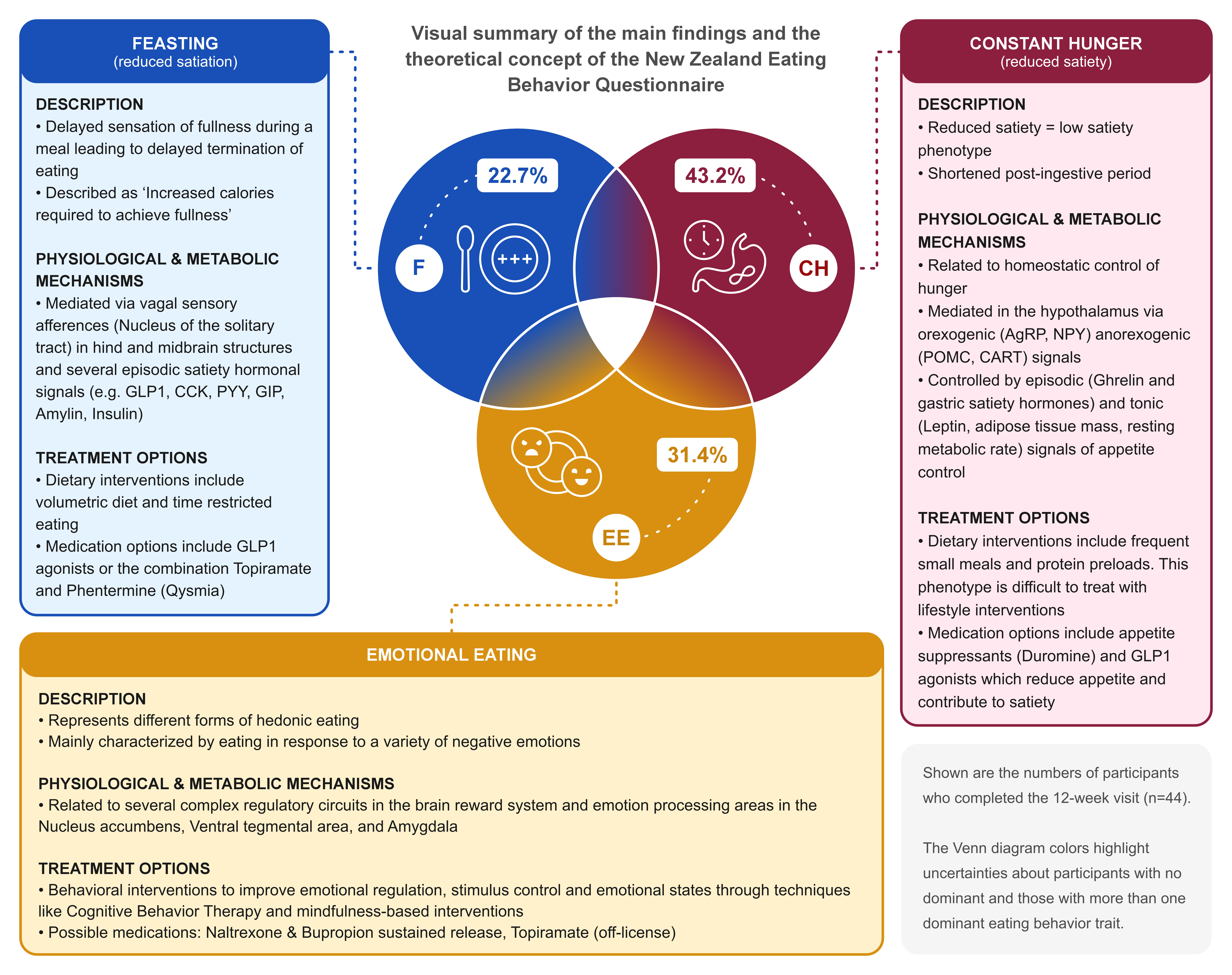
Here, researchers tested whether the New Zealand Eating Behaviour Questionnaire (NZ-EBQ) could identify individual eating behaviour patterns. The NZ-EBQ looks at three main eating behaviours:

  1. Feasting – finding it hard to stop eating once you start
  2. Constant hunger – feeling hungry again soon after eating
  3. Emotional eating – eating more when feeling stressed, sad, or upset
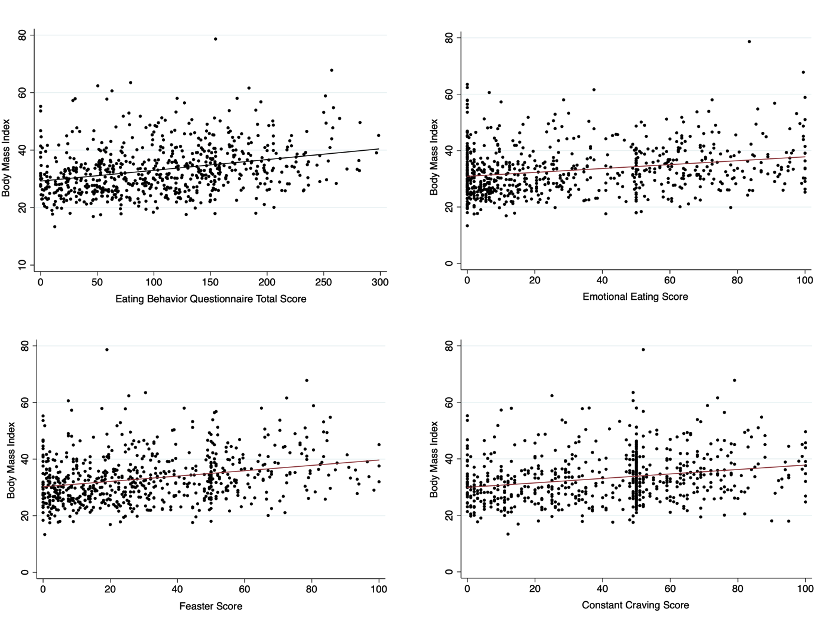
Graph showing list data
Figure 3 from the publication. ​

The relationship between participants EBQ total score (the sum of the three EB scores), and eating behavior specific scores on the NZ-EBQ (0–100) compared to Body Mass Index (kg/m2)

This study included people living with obesity, some of whom were on weight-loss medications. The researchers checked whether the questionnaire could reliably measure the three eating behaviours. Participants' answers were mostly consistent when they repeated the survey later, especially for emotional eating. When examining body weight, the study found that higher scores on any of the three eating patterns were associated with higher body mass index (BMI).

Overall, the findings show that the NZ-EBQ is a reliable tool for identifying personal eating behaviour traits. The results may help healthcare professionals better understand what drives someone's eating, for example, whether emotional eating or constant hunger plays a bigger role. This can help to tailor treatments such as lifestyle advice, nutrition support, or medication more precisely to each person's needs.


This study took the New Zealand Eating Behavior Questionnaire (NZEBQ) to the next level, testing it in two separate more diverse groups, including people with higher body weight and different ethnic backgrounds.

Unlike the earlier study, it focused on real-world reliability and how well the questionnaire captures three key eating patterns: feasting, constant hunger, and emotional eating.

The results showed it works consistently across different people, with higher scores linked to higher body weight.

This means the NZEBQ can help clinicians identify individual eating traits and design more personalized strategies for managing weight.

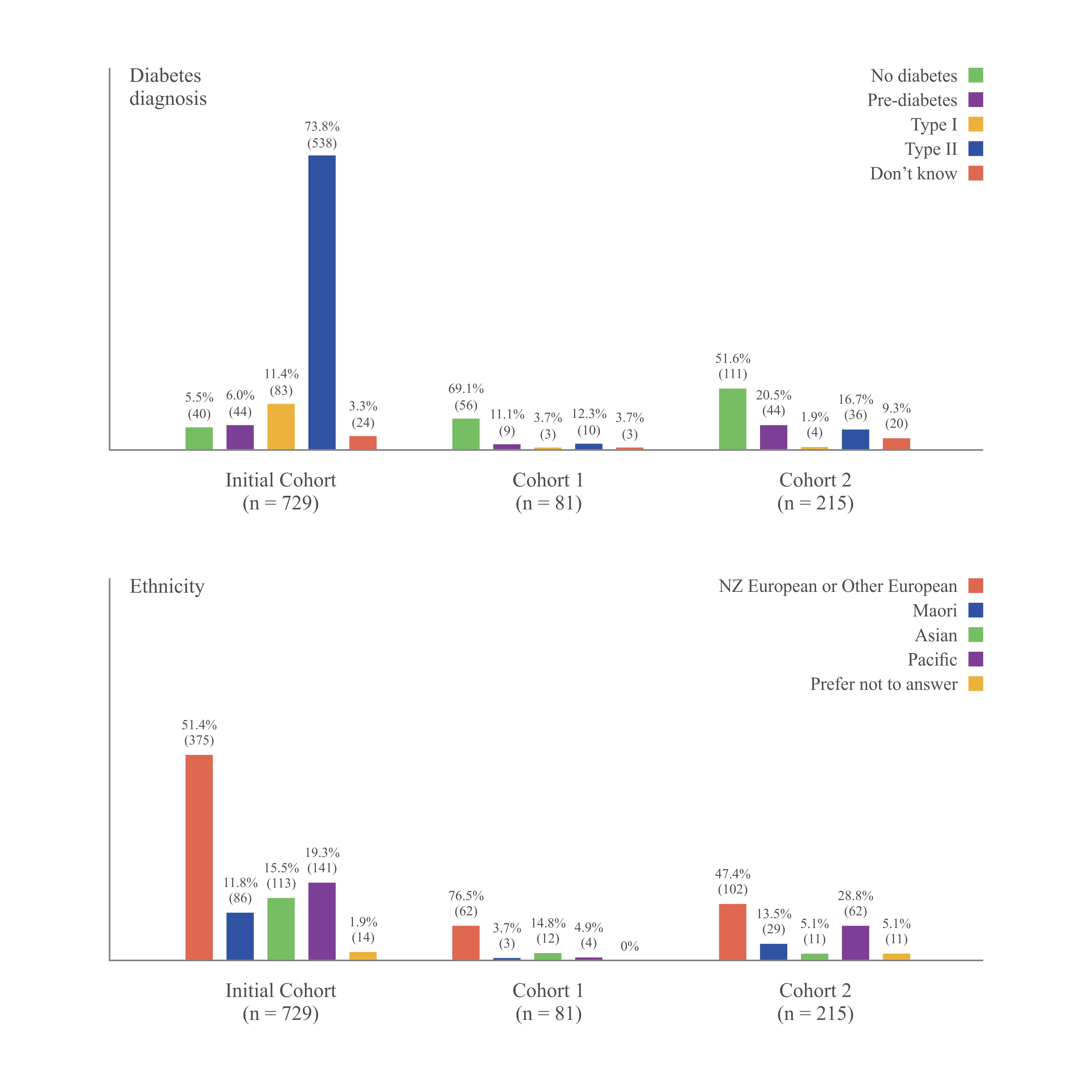
Graph showing list data
Figure 3 from the publication. ​

Prevalence of Diabetes and Ethnicity of Participants in the Two Cohorts of this study compared to Initial Cohort (first paper). The values are depicted as a percentage of participants within each cohort. The absolute number of participants is provided for reference.
 

The study titled “Applicability of the New Zealand-Eating Behaviour Questionnaire to predict weight loss responses to naltrexone/bupropion: a proof-of-concept trial” published in December 2025 in Obesity Pillars, the journal of the American Obesity Medical Association, examined whether specific eating behaviour types can predict weight loss response to the naltrexone/ bupropion combination (Contrave™), a pharmacotherapy designed to modulate the brain’s reward system and hypothalamic hunger pathways.​

The researchers stratified participants into three distinct eating phenotypes based on NZ-EBQ scores: (1) emotional eaters, (2) those with reduced satiety (chronic hunger and feeling hungry again soon after meals), and (3) those with reduced satiation (difficulty stopping eating).

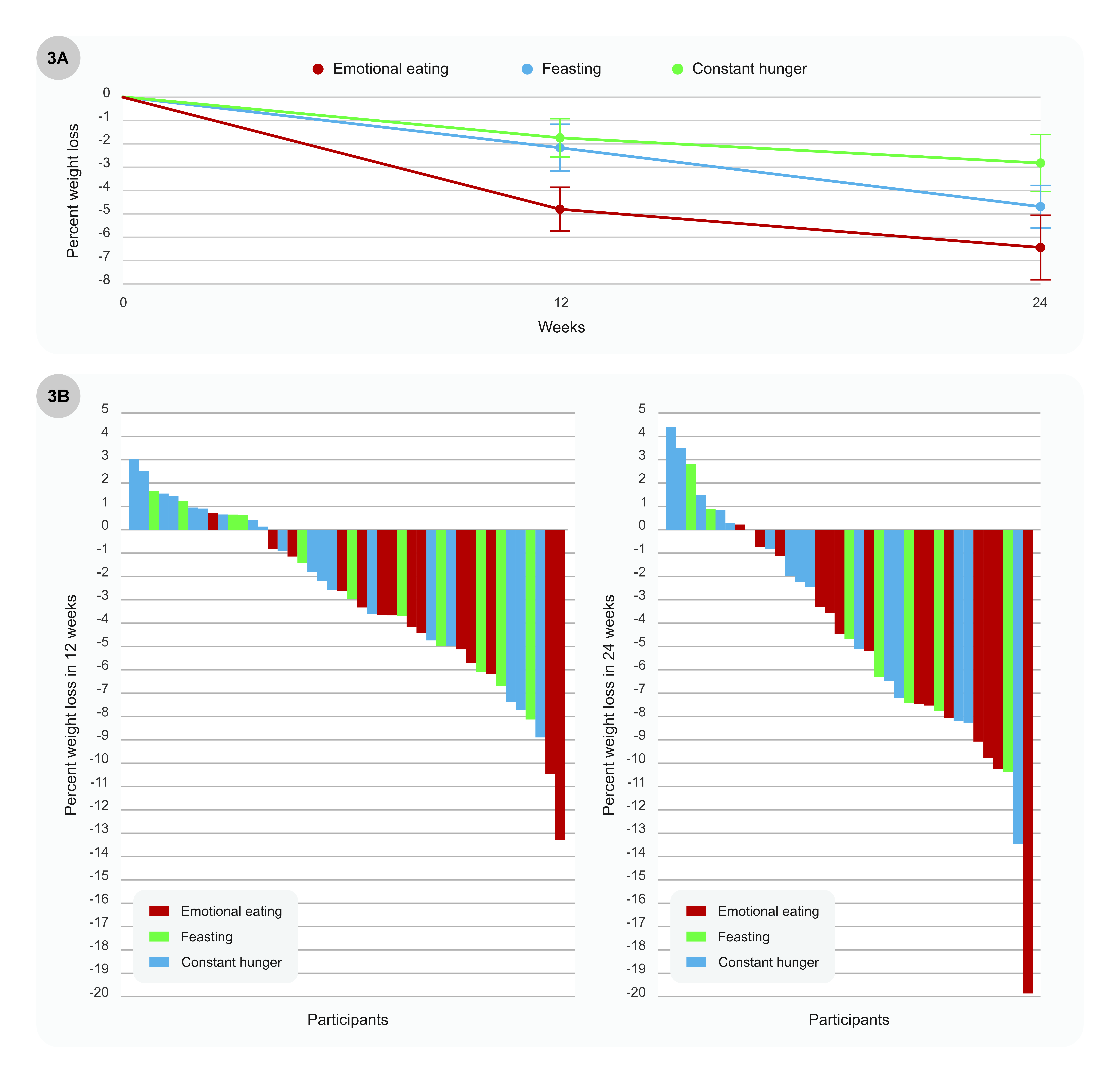
In this 24-week clinical study, the average weight loss across participants was approximately 4.5% of initial body weight, consistent with the expectations for this medication. However, emotional eaters achieved a significantly greater weight loss of 6.44% compared to those with other eating behaviours (reduced satiety), who experienced only a modest average weight loss of 2.8%, and several of them experienced a weight increase while on the medication.

These results show that the NZ-EBQ effectively identifies patients whose weight gain is primarily driven by emotions and food cravings, the specific pathway targeted by Contrave™, suggesting that the medication may work particularly well for people with this eating behaviour.

Graph showing list data
Figure 3 from the publication. ​

Participants with emotional eating achieve greater weight loss with Naltrexone/Bupropion combination compared with participants with constant hunger and feasters. ​
Panel A shows the average weight loss from baseline among participants at 12 and 24 weeks​
Panel B shows a waterfall plot of the weight loss of individual participants whereby each bar represents one participant.

The results support the concept of precision obesity treatment, where assessment of eating behaviour can inform medication selection. Larger studies are needed, but the NZ-EBQ shows promise as a practical tool to personalise obesity management in clinical practice.


How testing works

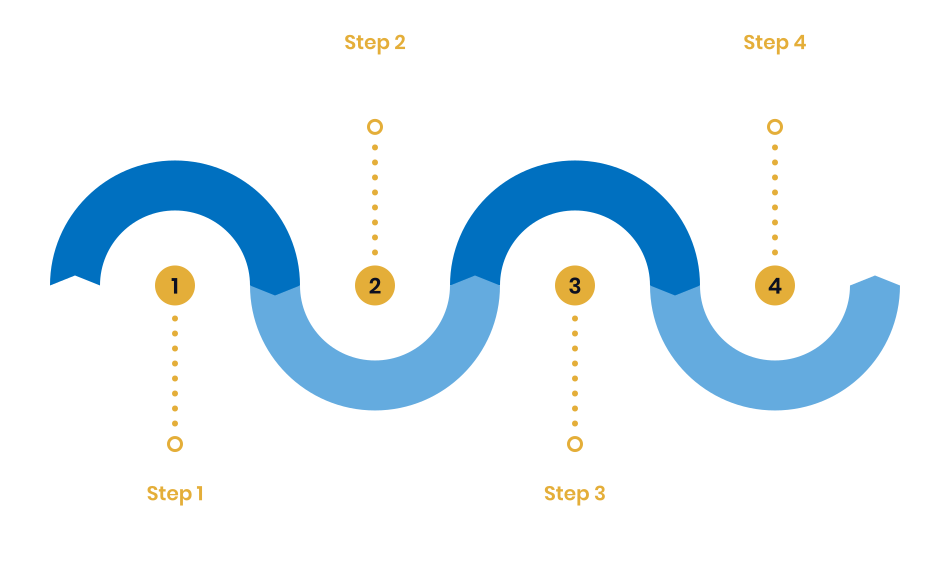
The four steps of the test

Step 1

Practice how to take the test

Slider questions

Place the cursor on the point that best represents your general perception or feeling about the question.

Definitely FALSE Undecided Definitely TRUE
0

Image questions

There will be different image-based questions. Please follow the instructions and answer the questions.

Banana Waffle

You will be shown an image and asked about your preferences, thoughts and feelings.

Please take as long as you need, answer as honestly as possible, reflecting on how you think about the image and how it makes you feel.

Practice your response below with the slider to get ready for the first set of questions.

How often do you feel hungry?

Only at meal times Sometimes between meals Almost all the time
0
Practice your response below with the slider to get ready for the first set of questions.

During a meal, I have no sense of being full
and can't stop until I'm really stuffed.

Definitely FALSE Undecided Definitely TRUE
0

Please imagine, as vivid as you can, the fragrance and the taste of the waffle as you savour the first bite.

Which of the following answers ring true when you imagine savouring the first bite? Please select all the choices that apply to you.

Step 2

Take the Pretest – My hunger and fullness sensation RIGHT NOW

Place the slider at the point on the line you agree most with.

How HUNGRY do you feel right now?

Not at all hungry Extremely hungry
0
Place the slider at the point on the line you agree most with.

How FULL do you feel right now?

Not at all Extremely full
0
Place the slider at the point on the line you agree most with.

How strong is your DESIRE TO EAT right now?

Not at all Extremely
0
Place the slider at the point on the line you agree most with.

HOW MUCH FOOD could you eat right now?

None at all A very large amount
0
Step 3

The main questionnaire - instructions

Are you ready to take the test?

Be as honest and accurate with your answers as you can.

There are no right or wrong answers.

This tool provides general health information only and does not constitute medical assessment or advice.

Place the slider at the point on the line you agree most with.

During a meal, I have no sense of being full and can't stop until I'm really stuffed.

Definitely FALSE Undecided Definitely TRUE
0
Place the slider at the point on the line you agree most with.

When I feel anxious, worried, or tense, I find myself eating.

Definitely FALSE Undecided Definitely TRUE
0
Place the slider at the point on the line you agree most with.

When I'm preparing food, I cannot stop tasting and eating.

Definitely FALSE Undecided Definitely TRUE
0
Place the slider at the point on the line you agree most with.

Are you able to stop eating whenever you want?

Yes, it's easy to stop With some difficulty No, I can't stop until I'm full
0
Place the slider at the point on the line you agree most with.

I can get moody when I can't have certain foods I crave,
and I feel bad or empty if I deny myself having them.

Definitely FALSE Undecided Definitely TRUE
0
Place the slider at the point on the line you agree most with.

I can get hungry again in a few hours, even after a large meal.

Hardly Ever Occasionally Most of the Time
0

What is the first thing that comes to mind when you see this picture?

What is the first thing that comes to mind when you see this picture? Please write only a couple of words.

Place the slider at the point on the line you agree most with.

Do you eat large portion sizes?

Definitely FALSE Undecided Definitely TRUE
0
Place the slider at the point on the line you agree most with.

When I feel lonely, I console myself by eating.

Definitely FALSE Undecided Definitely TRUE
0
Place the slider at the point on the line you agree most with.

Do you feel a sensation of fullness during eating?

I know
when I had enough
Sometimes,
I overeat
Frequently, I eat so much
that I feel bloated
0
Place the slider at the point on the line you agree most with.

When I feel emotionally upset or when someone lets me down,
I have a strong desire to reward myself with food.

Definitely FALSE Undecided Definitely TRUE
0
Place the slider at the point on the line you agree most with.

I have cravings or urges to eat snacks after supper or before bedtime.

HARDLY EVER OCCASIONALLY MOST NIGHTS
0
Place the slider at the point on the line you agree most with.

Once I start eating, I have trouble stopping.

Definitely FALSE Undecided Definitely TRUE
0
Place the slider at the point on the line you agree most with.

I eat when I'm down.

NEVER Undecided VERY OFTEN
0
Place the slider at the point on the line you agree most with.

When I'm hungry, I lose control over how much I eat
and find it hard to stop eating.

Definitely FALSE Undecided Definitely TRUE
0
Place the slider at the point on the line you agree most with.

When I see a real delicacy,
I often get so hungry that I must eat it right away.

NOT AT ALL Undecided Absolutely TRUE
0

Please click on the cookie you would like to eat. (only one choice allowed)

Place the slider at the point on the line you agree most with.

When I feel sad, blue, or disappointed,
I often overeat or have the desire to eat.

Definitely FALSE Undecided Definitely TRUE
0
Place the slider at the point on the line you agree most with.

Whenever I have a food craving, I keep on thinking about eating
until I actually eat it.

Definitely FALSE Undecided Definitely TRUE
0
Place the slider at the point on the line you agree most with.

I have a desire to eat when things have gone wrong.

Definitely FALSE Undecided Definitely TRUE
0
Place the slider at the point on the line you agree most with.

How often do you feel so hungry that you just must eat something?

NEVER OCCASIONALLY VERY OFTEN
0
Place the slider at the point on the line you agree most with.

When you are going through a stressful or upsetting time,
what happens to your eating?

I go off food completely Undecided I find it difficult to control
my eating (I eat much more)
0

Please imagine, as vividly as you can, the fragrance and the taste of the waffle as you savour the first bite.

Which of the following answers rings true when you imagine savouring the first bite? Please select all the choices that apply to you.

Place the slider at the point on the line you agree most with.

How difficult would it be for you to stop eating halfway through a meal
(not finish your plate)?

Very Easy Moderately Difficult Very Difficult
0
Place the slider at the point on the line you agree most with.

I am always hungry enough to eat at any time.

Definitely FALSE Undecided Definitely TRUE
0
Place the slider at the point on the line you agree most with.

I know that I am an emotional eater.

Definitely FALSE Undecided Definitely TRUE
0
Place the slider at the point on the line you agree most with.

If I haven't eaten for a while,
I find it very hard to resist my hunger.

NEVER OCCASIONALLY VERY OFTEN
0
Place the slider at the point on the line you agree most with.

How difficult is it for you NOT to overeat at a large, tasty meal
(e.g. buffet-style meal)?

VERY EASY Undecided VERY DIFFICULT
0
Place the slider at the point on the line you agree most with.

I have a habit of eating too much at night,
and I'm not hungry in the morning.

HARDLY EVER OCCASIONALLY MOST NIGHTS
0

Demographics

Please tell us a bit about yourself to help interpret your Eating Behaviour score.

Thank You!

  • Thank you for taking the time to complete the questionnaire. Your responses will help us calculate your unique eating behaviour phenotype.
  • Here we are asking for height and weight data to calculate your Body Mass Index (BMI) to interpret your individual data in a broader context.
  • This response helps you understand how your unique eating behaviour relates to your BMI and to the background population.
  • Your responses will remain completely anonymous. No personally identifying information will be collected, and your answers cannot be traced back to you. We will only collect aggregated data and trends, and your individual answers will remain confidential.

Your Honest Input Matters

Please provide correct answers as we need to use the data to calculate your results.

Privacy Policy – New Zealand Eating Behaviour Questionnaire (NZ-EBQ) web-application

Introduction

This Privacy Policy explains how Comprehensive Obesity Medicine Limited ("we", "us", "our") collects, uses, stores, and protects personal and health information when you use our New Zealand Eating Behaviour Questionnaire (“NZ-EBQ”) web application (the “NZ-EBQ web application”) and related services (the “Service”), as well as your rights regarding your personal information.

We are committed to protecting the privacy and confidentiality of personal information. We handle personal and health information in accordance with the Privacy Act 2020 and, where applicable, the Health Information Privacy Code 2020, which provide additional protections for health information (Ministry of Health NZ).

By using our Service, you acknowledge and agree to the collection and use of information as described in this Privacy Policy.

Scope of this Policy

This Privacy Policy applies to all users of the NZ-EBQ web application, including patients whose information is entered into the system, healthcare professionals using the platform, and visitors to our NZ-EBQ web application. This policy applies to all personal and health information collected through the Service.

Definitions

Personal Information - Information about an identifiable individual, as defined under the Privacy Act 2020.
Health Information - Information relating to an individual's health status, medical history, treatment, or healthcare services.
User - Any individual who accesses or uses the Service.

Information We Collect

We may collect the following categories of information:

Personal Identification Information

  • Full name
  • Date of birth

Health and Clinical Information

Where applicable, the Service may collect:

  • Abbreviated weight related medical history
  • Self-assessed clinical measurements
  • Questionnaire responses

However, we do not collect any other clinical and health information except the information that is the results of the EB assessment generated by the Service.

Account Information

  • User activity within the platform

Technical Information

We may automatically collect:

  • Location, internet protocol (IP) address, and session information
  • Browser type and device information
  • Access times and usage statistics
  • Log files and security data
  • Cookies and other tracking technologies (see "Cookies" section below)
  • Analytics and usage data relating to your interaction with the website and online advertising

Information Provided by Users

  • Information entered directly by users through the Service

How Do We Collect Personal Information?

We collect personal information only directly from you when you complete our NZ-EBQ and when you interact with our NZ-EBQ web application or otherwise communicate with direct messages. We do not collect information indirectly from other sources.

You are not required to provide us with any personal information that we request. However, if you do not do so, we may not be able to provide services to you.

Purpose of Collection

We collect personal and health information only for lawful and necessary purposes, including for providing digital health services, maintaining user accounts and authentication, improving the functionality and security of the Service, and conducting internal research and quality improvement.

We also collect personal and health information to respond to funding or clinical audit requests or other inquiries and information requests when required by law or professional standards to comply with our legal and regulatory obligations under New Zealand law, including the Privacy Act 2020 and the Health Information Privacy Code 2020. We only collect information that is reasonably necessary for these purposes.

Use of Information

We may use personal and health information to deliver and operate the Service, to provide healthcare-related functionality, to improve system performance and user experience, to monitor system security and to conduct internal analytics. Information collected through the Service may be used for internal research, evaluation, and quality improvement purposes.

Where possible, data will be de-identified (information that cannot identify you) or aggregated before analysis and research findings will not identify individual patients. No patient data is sold or provided to commercial entities.

Disclosure of Information

We do not sell, rent, or share personal or health information with third parties for commercial purposes. We will never share your personal health information for marketing purposes without your explicit consent.

Information may only be disclosed to healthcare professionals using the Service, where disclosure is required or permitted by New Zealand law, or where necessary to prevent serious harm to a person’s health or safety.

All disclosures are handled in accordance with New Zealand privacy law with the consent of the individual concerned.

Data Storage and Security

We protect patient data with all reasonable technical and process controls to prevent unauthorised access, use, or disclosure across all stages of data handling.

When you complete our NZ-EBQ the summarised results are sent to our secure …… account for analysis and administrative processing.

Security measures include encrypted data transmission (HTTPS), secure server infrastructure and role-based access controls. However, no method of electronic storage or transmission is completely secure.

Data Retention

Personal and health information will be retained only for as long as necessary to provide the Service, fulfil clinical or operational purposes, and meet legal or regulatory obligations.

When information is no longer required, it will be securely deleted or permanently anonymised.

Your Privacy Rights

Under the Privacy Act 2020, you have the right to request access to personal information that we hold about you, request that we correct your personal information or submit a written statement if you believe your personal information is inaccurate, and make a complaint if you believe your privacy has been breached. You can exercise these rights at any time by contacting us using the contact details provided under "Contact us" below. We will respond to requests within the timeframes required under New Zealand law.

Data Transfers

Data are stored and processed in New Zealand, however, where data storage or processing occurs outside New Zealand, we ensure that appropriate safeguards are in place and service providers comply with privacy obligations equivalent to those required under New Zealand law.

Cookies and Website Analytics

What are cookies? A cookie is a small text file stored on your computer's memory or hard disk for a predefined period.

Our NZ-EBQ web application may use cookies or similar technologies to maintain user sessions, analyse web-app usage, to improve the functionality of the Service, and to adapt our services to your requirements and to improve your experience.

We may also use in the future third-party vendors to show our ads on the internet and serve these ads based on your prior visits to our platforms. We may use analytics data supplied by these vendors to inform and optimize our advertising campaigns.

Privacy: While cookies allow a computer to be identified, they do not contain personal information about a specific individual.

Your control: You can modify your device settings to control cookie acceptance. However, please note that some features of our services may not function properly if cookies are disabled. By using our services, you consent to our use of these tracking technologies in accordance with this policy.

Children’s Privacy

The Service is not intended for individuals under the age of 16 without appropriate supervision from a parent, guardian, or other representative. We do not knowingly collect personal information from children without appropriate authorisation.

Changes to This Privacy Policy

We may update this Privacy Policy periodically to reflect changes to our services, changes in legal or regulatory requirements, and improvements to privacy practices. Any updates will be published on this page with a revised “Last Updated” date. Continued use of the Service after changes indicates acceptance of the updated policy.

Contact and Complaints

If you have questions about this Privacy Policy or wish to exercise your privacy rights, please contact us in the first instance.

Contact us directly: Please email your concerns to info@nzebq.nz. We will investigate your complaint and respond to you.

If you believe your privacy rights have been breached and you are not satisfied with our response, you may contact:

Office of the Privacy Commissioner (OPC): If you are unable to resolve the issue with us to your satisfaction, you are entitled to take your complaint to the Office of the Privacy Commissioner (OPC). You can find information on the OPC website: https://privacy.org.nz.

© 2026 Comprehensive Obesity Medicine Limited. All rights reserved.

Terms and conditions of Service

Acceptance of Terms

This website is owned and operated by Comprehensive Obesity Medicine Limited (“COM”, “we”, “us”, or “our”).

These Terms of Service (“Terms”) govern your access to and use of the New Zealand Eating Behaviour Questionnaire (“NZ-EBQ”) web application and related services (the “Service”).

By accessing or using the Service, you agree to be bound by these Terms. If you do not agree with these Terms, you must not use the Service.

Description of the Service

The NZ-EBQ has been developed by researchers from the University of Auckland and the NZ-EBQ web application is managed by COM.

The Service provides digital questionnaires and analytical tools designed to assess and better understand eating behaviours, motivations for eating, and related health behaviours.

The NZ-EBQ web application may collect responses to behavioural questionnaires, generate summaries or feedback based on questionnaire results, allow users or healthcare professionals to review eating behavioural patterns, and support research and quality improvement related to eating behaviours.

The Service may be used by individual users (consumers), healthcare professionals and researchers or organisations conducting health assessments.

Questionnaire Content and Results

The questionnaires provided by the Service are intended to explore patterns of eating behaviour and related psychological or behavioural factors.

Results generated by the platform are based on questionnaire responses and involve statistical or algorithmic analysis. Results should be interpreted cautiously as they may not fully reflect an individual’s health or behaviour and should not be used as a basis for clinical decisions. Healthcare professionals using the Service remain responsible for independent clinical judgement.

Eligibility

To use the Service, you must be at least 16 years of age, or use the Service with appropriate supervision from a parent, guardian, or other professional. By using the Service, you confirm that you meet these eligibility requirements.

Medical Disclaimer

The questionnaires and analytical outputs provided by the NZ-EBQ web application are intended to support the assessment of eating behaviours and related factors that may influence responses to weight management strategies. The Service is intended for informational and research purposes, and the platform is designed as an informational and decision-support tool only.

The information generated by the platform is based on questionnaire responses provided by the user, reflects behavioural patterns and statistical associations. This information is not intended to diagnose any medical condition, and it does not constitute medical advice.

The questionnaire and outputs do not constitute medical advice, do not diagnose medical conditions, and do not replace professional healthcare assessment and is not intended as a substitute for medical advice. You should not use the information contained on this website for diagnosing any medical issues and should always seek advice from a qualified healthcare professional for medical concerns, diagnosis, or treatment. By using this website, you hereby agree not to rely on any of the information contained herein.

The questionnaires used by the platform assess eating behaviours and related psychological drivers. The platform is not designed to diagnose eating disorders or mental health conditions. Individuals experiencing symptoms suggestive of an eating disorder or significant psychological distress should seek assessment from a qualified healthcare professional.

The predictive outputs generated by this platform are derived from behavioural questionnaires and statistical models. These outputs represent probabilistic estimates rather than deterministic predictions, and individual responses may vary.

Reliance on information

We strive to ensure that the information provided is accurate and up-to-date. However, you acknowledge that the NZ-EBQ web application operator (COM) does not guarantee or warrant the accuracy, currency and completeness of the information on this web-app. To the extent permitted by applicable law, COM assumes no liability or responsibility for any errors or omissions in the content of the NZ-EBQ web application. COM reserves the right at any time to change or add to the information provided on this website, including these terms, without notice.

Ongoing research and development

Some outputs generated by the platform may rely on statistical models, research findings, or predictive algorithms. These models may evolve as new evidence becomes available, have limitations in accuracy or generalisability, and do not apply to all individuals or clinical circumstances. Results should therefore be interpreted cautiously.

For Health care professional using this platform

Healthcare professionals using the platform remain fully responsible for clinical assessment, diagnostic decisions, treatment selection, prescribing decisions and monitoring patient safety. Outputs generated by the platform should be interpreted in conjunction with clinical evaluation, medical history, and professional judgement.

The NZ-EBQ web application may provide insights about behavioural drivers that could be associated with responses to weight management medications, however, the NZ-EBQ web application does not recommend specific medications and medication decisions must be made by a licensed healthcare professional. Treatment decisions should follow relevant clinical guidelines and regulatory approvals.

The platform is intended as a digital health tool and is not classified as a regulated medical device in all jurisdictions. Users are responsible for ensuring compliance with applicable professional and regulatory requirements when using the platform in clinical settings.

Privacy

We collect and process data in accordance with applicable privacy laws, including the Privacy Act 2020 and the Health Information Privacy Code 2020. Please review our Privacy Policy for details on how information is collected, used, and protected.

Research Use of Data

Responses entered into the Service may be used for internal research, evaluation, and quality improvement purposes. Where possible data, used for research will be de-identified (information that cannot identify you) or anonymise results will be presented in aggregate form. No identifiable personal data will be sold or shared with commercial third parties. Details regarding data use are described in our Privacy Policy.

User Responsibilities

When using the Service, you agree that you will not provide false or misleading information, attempt to gain unauthorised access to the system, interfere with system security or operation, misuse the questionnaires or analysis tools, or upload malicious software or code. Users are responsible for ensuring that any information they submit is lawful and appropriate.

You agree not use any robot, spider or other automatic or manual process or device to “scrape”, monitor, “mine”, or copy pages or any parts of this web-application without COM’s express consent. You also agree that you will not use any device, software or routine to interfere with the proper operation of this web-application. Any access or attempt to access other areas of COM’s systems, or any information on its systems is strictly prohibited.

Availability of the Service

We aim to provide reliable access to the Service but do not guarantee uninterrupted availability. The Service may be temporarily unavailable due to system maintenance, technical issues, security updates, or external infrastructure failures. We reserve the right to modify or discontinue features of the Service at any time.

Viruses

COM does not warrant that this website will be free from viruses or other threats to your computer systems or software that may be transferred electronically. COM will not be liable to you for any damage caused by any such viruses or other material.

Linked third party sites

The NZ-EBQ web-application may provide links or references to websites not affiliated with COM. Such links are provided only as a convenience to users. COM is not responsible for the content of any other website linked to this website. You access linked third-party websites entirely at your own risk.

Intellectual Property and Copyright

COM owns all copyright and other intellectual property rights in the contents and design of the NZ-EBQ and the NZ-EBQ web application. This includes all content provided through the Service, including questionnaires, scoring algorithms, software, visual interfaces, graphics, design, compilation, information, data, computer code, design elements, documentation and all other elements of the Service provided by COM are protected by relevant intellectual property and proprietary rights and applicable laws.

You must not reproduce, adapt, store in a retrieval system, transmit, print, display, perform, publish the whole or any part of the NZ-EBQ. You may use the NZ-EBQ and content on the NZ-EBQ web application on your Internet browser for your own personal or non-commercial purposes only. It is the policy of COM to fully enforce its intellectual property rights permitted by law. All content of the web application, including any images or text, is protected by NZ, Australian and U.S.A. copyright laws and may not be distributed, downloaded, modified, reused, reposted or otherwise used. Except as provided herein, no part of any content or software on this web application may be copied, downloaded or stored in a retrieval system for any other purpose, nor may it be redistributed for any purpose, without the express written permission of COM. The use or misuse of COM services or other materials, except as permitted herein, is expressly prohibited and may be a violation of copyright law, communications regulations and statutes and other laws, statutes and/or regulations.

Limitation of Liability

To the maximum extent legally permitted, COM is not liable to you for any claim, expense, loss or damage incurred by you arising directly or indirectly out of your access or use of (or inability to access or use) this web application, whether direct, consequential, special, indirect or other loss or damage, and whether such liability arises out of contract, tort, statute or otherwise. To the maximum extent permitted by law, the providers of this web application are not responsible for clinical decisions made solely on the basis of information generated by the system, decisions made based on questionnaire results, and any indirect or consequential loss or unauthorised access to user data resulting from circumstances beyond reasonable control.

Governing law

These terms and any disputes arising under them or otherwise in relation to this web application are governed by the laws applying in New Zealand.

Termination

We may suspend or terminate access to the Service if a user breaches these Terms, engages in misuse of the platform, or compromises system security. Users may stop using the Service at any time.

Changes to the Terms

We may update these Terms periodically. Changes will be posted on the website with an updated “Last Updated” date. Continued use of the Service after changes indicates acceptance of the updated Terms.

Feedback

You acknowledge and agree that all feedback and suggestions, including suggestions for improvements, enhancements, alterations, changes or revisions, or otherwise regarding the Services are assigned to COM and you have no further rights therein or thereto. We may use (or not use) such information without notice or compensation to you.

Entire Agreement

You acknowledge that these Terms, together with the Privacy Policy, represent the entire agreement between you and COM with respect to the Service, and that no other representations or promises, verbal or otherwise, will affect these Terms.


Contact Information

If you have questions about these Terms, please contact:

Organisation: Comprehensive Obesity Medicine ltd

Email: info@nzebq.nz or support@nzebq.nz

© 2026 Comprehensive Obesity Medicine Limited. All rights reserved.

General Information

Your personal Eating Behaviour Score

Use your score to start or redirect your weight loss journey. The NZ-EBQ calculator is currently open access and free to use by anyone interested in their unique eating behaviour, whether they are on obesity medications or not.

The NZ-EBQ does not give or replace medical advice or medical information. Your eating behaviour score is not a diagnosis of a particular medical condition or of the underlying causes of your weight, as your weight will be affected by many other factors.

There are no ‘good’ or ‘bad’ results; the questionnaire is designed to describe eating patterns, not to judge or diagnose. Your responses may help guide future discussions, support options, or research related to eating behaviour.

You should always talk to your doctor or other healthcare professional about any health problems. The questionnaire does not replace professional healthcare assessment and is not intended as a substitute for medical advice.

What will we do with your data?

We will use the answers you provide to calculate your unique eating behaviour score and to provide you with a summary of your information on how your score compares to others.

By using the NZ-EBQ calculator, you consent to us using your information for this purpose. We do not share that information with any third party other than the service providers who securely holds the data.

We respect your privacy and are committed to protecting your personal data. Your data will be processed according to our Privacy Policy.

Further information about the questionnaire and how to contact us are set out in our Terms and conditions of Service.


Be part of our ongoing research.

With your consent (optional), we will use your data for non-commercial research purposes. For example, we may publish research into eating behaviours that uses this information; however, this is not a research study. We may also use it to improve the NZ-EBQ.

We would appreciate it if you could contribute the information you have provided when using the NZ-EBQ today to future research into eating behaviours and the usefulness of the NZ-EBQ.

If you give your consent, then we might:

  • Combine it with other data about you if you have shared it with us.
  • Publish it anonymously so that no personal data are revealed
  • Share it with other researchers.
  • Offer you the chance to participate in further research, for example if we want to find people who have answered in a particular way.

We will not use or share your data for any other purpose. If we share or publish any of your data, we will make sure there is no information that can identify you in the information we share.

Your consent is completely optional (you will get the same results either way). You may withdraw your consent at any time.


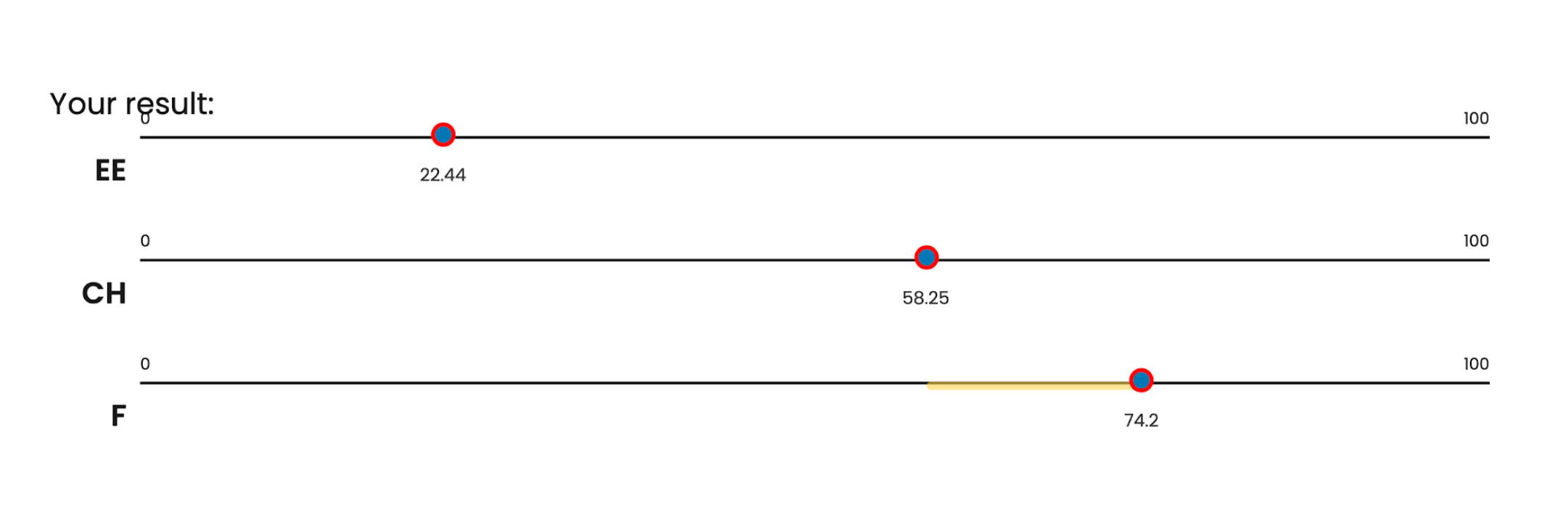
Visual Analogue Scales (0-100)

Your
results:

EE
0
100
CH
0
100
F
0
100

How to understand these scales

  • Each scale shows a different aspect of your eating behaviour.
  • The three scales have been constructed based on your answers in the questionnaire
  • Between 7 and 10 questions contribute to one scale (EE, CH and F)​
  • There are no right or wrong scores.
  • Each scale runs from 0 to 100.
  • 0 means very low on that scale
  • 100 means very high on that scale
  • The number shows where your results sit along that line

For example:

  • For a person with the ‘Feasting’ eating behaviour type (difficulty in stopping eating or eating large portions), the results may look like: Emotional eating is low, Constant Hunger is moderate, and Feasting is high
  • Their primary eating behaviour is Feasting, and their secondary driver is Continuous Hunger, with some degree of overlap. Such a pattern can help guide conversations about what is most relevant or helpful to focus on when starting a weight-loss journey.

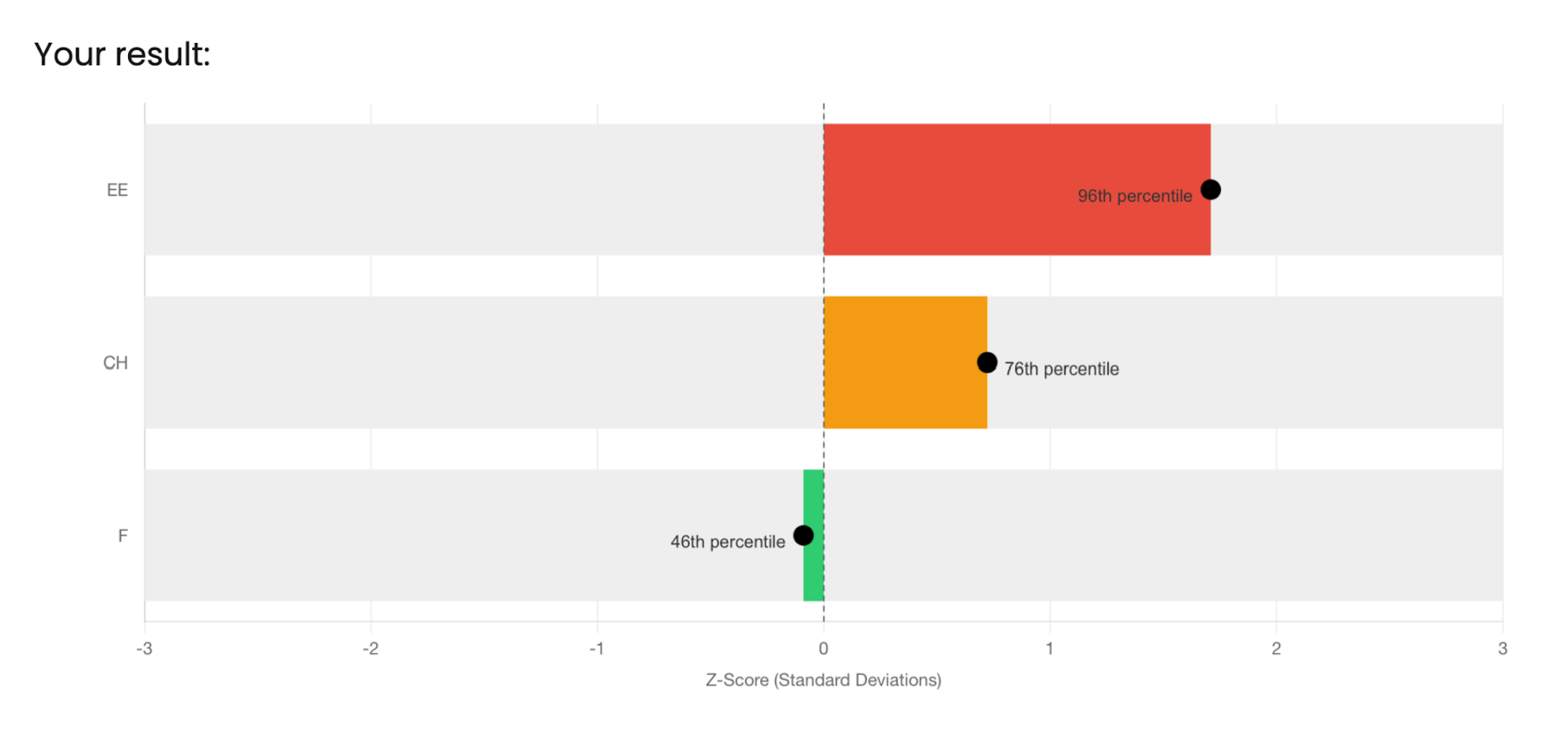
Bar Chart - Z Scores

Your
results:

How to understand this chart

  • This chart shows how your results compare with those of other people who have taken the same test.
  • Each bar shows whether your score on a particular eating behaviour trait is higher or lower than most people, and by how much.

In detail

  • The vertical dashed line at zero shows the average score of all other people who have taken the same test
  • Bars extending to the right mean your score is above average.
  • Bars extending to the left mean your score is below average.
  • The length of the bar shows how far from average your score is.

For example:

  • Compared with the reference population, this individual shows a very high score on Emotional Eating, a slightly-above-average score on Constant Hunger, and a clearly below-average score on Feasting.
  • This result should be interpreted in conjunction with the individual Visual Analogue Scales (graph 1).

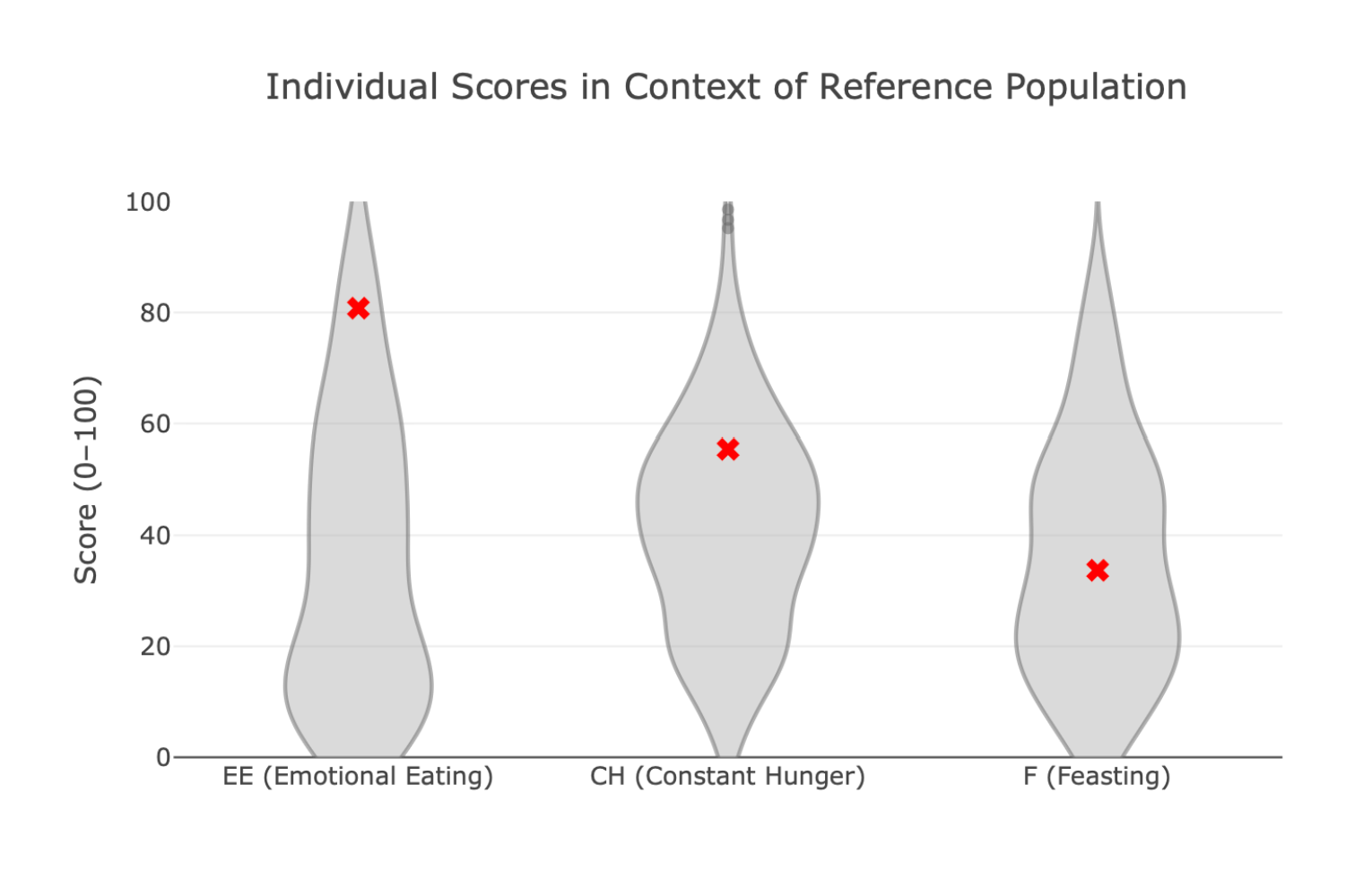
Violin Plot

Your
results:

How to understand this chart

  • This chart shows how your results compare with those of others who have taken the same questionnaire.
  • The shaded shape shows where people’s scores fall.
  • The wider parts of the shape mean more people scored there.
  • The RED dot marks your own score.
  • Where your dot sits within the shape shows whether your score is lower, typical, or higher when compared with others.

For example:

  • For this person, the results show stronger Emotional Eating than most others, a Constant Hunger score like that of most people who took the test, and a lower score than most in Feasting.
  • The results should be interpreted together with the individual visual analogue scales.

Scatter Plot

Your
results:

General information:

  • Each dot on the graph represents one person. The position of the dot shows that person’s eating behaviour score (along the bottom) and their body mass index, or BMI (up the side).
  • The large RED DOT shows where your value sits in relation to all others who have taken the test.
  • Overall, the distribution of points suggests a relationship between eating behaviour score and BMI, with the BMI tending to increase as eating behaviour scores increase.
  • However, people with similar eating behaviour scores can have different BMI values.
  • This means that knowing someone’s eating behaviour score does not reliably predict their BMI, and that eating behaviour is only one factor among many that influence body weight.
  • Many other factors, such as genetics, metabolism, physical activity, health conditions, and environment, also play important roles in determining a person’s BMI.

How to interpret the results:

Option A:
  • If your individual value (RED DOT) is above the average line (red line in the middle of the graph), your body mass index (BMI) is higher than average for people with a similar eating behaviour score. In simple terms, compared with others who have a similar eating behaviour score, your BMI is greater.
  • This shows that, for you, other factors, such as genetics, metabolism, medications, health conditions, physical activity, sleep, or life circumstances, are likely contributing to a higher BMI than would be expected based on your eating behaviour alone.

Option B:

  • If your individual value (RED DOT) is below the average line, your body mass index (BMI) is lower than average for people with a similar eating behaviour score. Hence, compared with others who have a similar eating behaviour score, your BMI is lower (you are leaner).
  • This result shows that your dominant eating behaviour is the driving factor for weight gain, and working on your dominant eating behaviour with lifestyle or medication might be the best approach for you.

About the New Zealand Eating Behaviour (NZ-EBQ) calculator

The NZ-EBQ calculator is intended to provide a guide to help you understand your unique eating behaviour type. It can show your primary and secondary drivers of eating and put them in the context of your body mass index. It also compares your results with those of hundreds of others who have already taken the test.

It can also show that your eating behaviour may be impacting your life and can be the starting point for a discussion with your healthcare provider.

  • Use your score to start or redirect your weight loss journey. The NZ-EBQ calculator is currently open access and free to use by anyone interested in their unique eating behaviour, whether they are on obesity medications. 
  • It does not give or replace medical advice or medical information. Your eating behaviour score is not a diagnosis of a particular medical condition or of the underlying causes of your weight, as your weight will be affected by many other factors, such as genetics, metabolism, medications, health conditions, physical activity, sleep, or life circumstances.
  • There are no ‘good’ or ‘bad’ results; the questionnaire is designed to describe eating patterns, not to judge or diagnose. Your responses may help guide future discussions, support options, or research related to eating behaviour.
  • You should always talk to your doctor or other healthcare professional about any health problems you may be suffering from.
  • Eating behaviours can change over time, and these results represent a snapshot, not something that is fixed.
  • Tracking your eating behaviour over time can help you to understand how any intervention, whether that’s diet, medication, or lifestyle changes, impacts your eating. 
  • It also lets you make data-driven decisions about which changes work for you. 
  • Our research (https://pubmed.ncbi.nlm.nih.gov/41445978/) shows an association between individual eating behaviour scores and successful use of certain medications, suggesting that eating behaviour matched medication choice doubled the likelihood of success. 
  • Repeat your calculation after making changes, to track your score over time and see what’s working.
  • The NZ-EBQ calculator is a result of our research. (https://pubmed.ncbi.nlm.nih.gov/37852374/) (https://pubmed.ncbi.nlm.nih.gov/40292445/)
  • The test was validated in over 1000 men and woman with a wide range of starting weight and different ethnicities and recently tested in people using prescribed obesity medication.
  • With key insights from this research, we created a new and improved version, called the NZ-EBQ calculator, which can be used by patients, clinicians, and researchers to drive forward the research about EB and how they impact weight management.
  • The four appetite questions at the start were designed to capture how you were feeling in the moment you completed the questionnaire. 
  • They ask about your current level of hunger, how full you feel, and how strong your desire to eat is. Each question examines a slightly different aspect of appetite, but together they provide an overall picture of your immediate appetite state. Your answers are combined to create an overall appetite score. 
  • This score helps us understand whether you are coming into the main part of the assessment feeling generally hungry or comfortably satisfied. This information can influence how you respond to later eating-related questions. 
  • By measuring appetite at the start, we can take your current appetite into account when calculating and interpreting later results. This step helps ensure that any findings reflect your typical eating behaviours and responses, rather than being overly influenced by how hungry or full you happened to feel at that moment.
  • Eating behaviour traits are relatively stable patterns in how we experience appetite and regulate eating. A large body of evidence shows that these traits meaningfully influence body weight and weight change over time. 
  • The NZ- EBQ measures EB traits that are related to aspects of eating that are less under voluntary our control (inert drivers of eating) such as satiety responsiveness (the awareness internal fullness signals), which is linked with overeating at mealtimes; emotional eating, which is eating in response to emotions such as stress, sadness, or boredom rather than hunger, and hunger, which consists of the intensity of feeling hungry and the time to return to hunger after a meal.
  • There are many other eating behaviour traits more closely related to judgement or voluntary behaviour, such as food responsiveness, enjoyment of food, planning and monitoring, restraint and its opposite, disinhibition, and external cue eating or variety seeking. Such behaviours can change and are less reliable measures for treatment selection but may be important and complementary.
  • We will use the answers you provide to calculate your unique eating behaviour score and to provide you with a summary of your information on how your score compares to others.
  • By using the NZ-EBQ calculator, you consent to us using your information for this purpose. We do not share that information with any third party other than the service providers who securely holds the data.
  • With your consent (optional), we will use your data for non-commercial research purposes. For example, we may publish research into eating behaviours that uses this information; however, this is not a research study. We may also use it to improve the NZ-EBQ. 
  • You may withdraw that consent at any time by contacting adim@nzebq.nz.
  • We will not keep your information longer than the purposes for which we collected it. If you give your consent for research purposes, because our research is intended to be long-term, we are currently unable to set a specific time limit. But we will keep it under review and ensure that your information is kept no longer than necessary.
  • Further information about your rights in relation to your data and how to contact us are set out in our Privacy Policy.

End of the Eating Behaviour Assessment

Feel free to leave us feedback on the NZ-EBQ!